|
|
|
Crosstalk Testing Methods for a Wavelength Multiplexed Single Fiber Blood Gas Sensor
Christopher K. Barber and Lawrence S. Ring
Lightsense Corporation 1513 18th Street Santa Monica, California 90404
ABSTRACT New fluorescence based optical fiber sensors have been developed for the monitoring of pH, Carbon Dioxide, and Oxygen in radial arteries. These sensors utilize wavelength multiplexing for detection of three parameters with one optical fiber. Unlike sensing systems in which separate fibers are used for each parameter, wavelength multiplexed systems have the potential for parameter to parameter optical interference. We refer to this interference as "crosstalk". Wavelength multiplexed systems and their potential for crosstalk are described. Investigating methods for obtaining independent isolation of multiple parameters under laboratory conditions are discussed. Computational methods of quantifying crosstalk are shown. Specific test protocols are provided, along with representative test results. Minimal crosstalk was found in the systems tested.
1. INTRODUCTION Recent developments in multiparameter fiber optic sensors require efficient laboratory bench testing to detect parameter-to-parameter interference. The small size, economy, stability and efficiency of a wavelength multiplexed fiber make these single fiber, multiparameter optrodes superior to their multiple fiber counterparts. One concern of single fiber systems is the potential for parameter-to-parameter interference (or cross-talk). This crosstalk interference is a potential source of inaccuracy in the wavelength multiplexed sensor. The single fiber sensor utilizes a mixed fluorescent dye system whose excitation and emission wavelengths are in separate parts of the spectrum. The overlap of both the excitation wavelengths and the absorbance wavelengths of the individual dyes are the source of these crosstalk effects. The testing for cross talk involves varying one of the sensors parameters while maintaining constant levels on all other parameters. Any change in the signal of the constant parameters is due to the crosstalk. The isolation of each variable is conducted for all the parameters in the system. In a blood gas sensor, pH, PO2, and PCO2 are the analytes being detected by the sensor. In testing of these sensors for crosstalk, the oxygen is varied while constant pH and carbon dioxide levels are maintained. The pH is varied with constant carbon dioxide and oxygen levels. Finally, the carbon dioxide levels are varied with constant oxygen and pH levels. Since the carbon dioxide concentration affects the solution pH through Carbonic Acid formation, it is difficult to maintain constant pH while varying the carbon dioxide. The Oxygen and pH have only very limited effects on the other solution parameters. For these tests, high gas flow rates ensure rapid equilibration and stable solutions. Upon completion of the testing the crosstalk interference from each parameter will be evident.
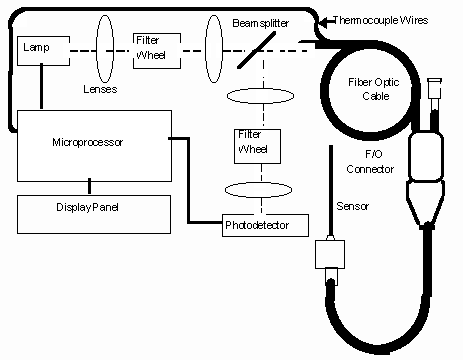
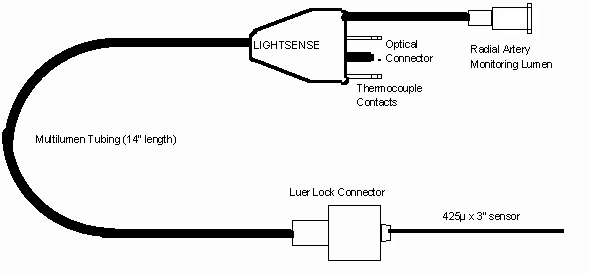
2. MATERIALS AND METHODS The Lightsense Corporation Model FS2 Fiber Optic Sensor System was used for all test measurements. The instrument is 4.5"x 8.5" x 9.25" and consists of a Xenon flashlamp assembly, multichannel filter wheel, beam splitter, fiber optic cable, solid state photodetector, and a microprocessor. The instrument schematics are depicted in Figure 1. The instrument was fitted with Lightsense single fiber, multiparameter, fiber optic Oxygen, Carbon Dioxide, and pH chemical sensors. The sensors were 17" long with the final 3" insertable length measuring 425� O.D.. These sensors incorporate an integral thermocouple temperature sensor. A diagram of the sensor is shown in Figure 2. A standard solution for testing was prepared in advance and allowed to stabilize overnight. At the end of each equilibration period, a solution sample was withdrawn and injected into the Blood Gas Analyzer. The solution's pH was cross-checked using an Orion pH electrode. The solutions were monitored using a Corning 168 Blood Gas Analyzer and an Orion Ross 8104 pH electrode. The gas mixing was done using three Tylan 260 mass flow controllers, one for each gas. The data was collected using a Macintosh with both a standard Terminal program (Red Ryder), and a custom BASIC program.
Figure 1. Instrument Schematic
Figure 2. Sensor
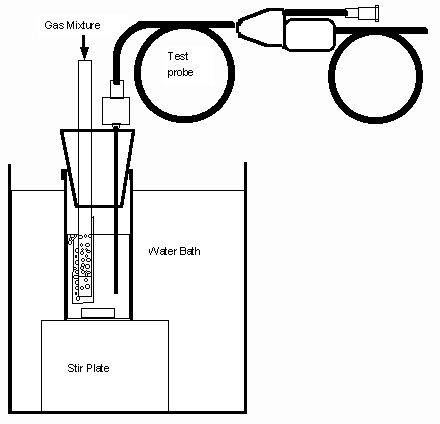
3. EXPERIMENTAL One liter of a standard buffered saline solution was prepared and allowed to stabilize overnight. The composition of the test solution is given below. The Sodium Bicarbonate was used to establish the pH range of the solution when exposed to Carbon Dioxide. The two phosphate buffers contribute to the initial pH of the solution, and the Sodium Chloride maintains the solution at physiological ionic strengths. Standard Test Solution Composition 23.8 mM NaHCO3 2.6 mM KH2PO4 17.0 mM Na2HPO4 140 mM NaCl In 5 - 60mL glass jars, 50mL of test solution was added along with a magnetic stir bar. Each jar was fitted with a three hole #6 rubber stopper. Through one hole a fritted glass sparger was inserted. A 4" blunt stainless steel needle was inserted in the second hole as a sampling port for Blood Gas Analyzer samples. The vials were placed on a pneumatic stir plate submerged in a water bath. This permitted constant mixing action in the vials. The water bath is held at a constant 37�C �0.1�C. A polycarbonate sleeving surrounded the glass sparger. The top of the square sleeving was angular and opened below the solution line in the vial. The bottom was notched on two opposite faces allowing the solution to flow through. This sleeving prevents bubble formation on the sensors. Bubble formation can cause erroneous readings due to a variety of effects. Formation of bubbles is not a physiological occurrence. The apparatus is shown in Figure 3.
Figure 3. 3.1 Oxygen Crosstalk Protocol 1. The test sensor was placed in the 60mL vial containing 50mL of test solution and equilibrated to 37�C in the water bath. The gas mixer was set at Level 1 and this mixture was delivered to the solution through the glass sparger. 2. The solution was allowed to equilibrate for 25 minutes at this gas level at a flow rate of 30mL per minute. Note: Lower flow rates cause longer solution equilibration times. 3. A sample was withdrawn after 25 minutes and injected into the Blood Gas Analyzer (BGA). 4. The gas was sequenced from Level 2 through Level 5, allowing 25 minutes per Level. At the end of each equilibration time, a sample was tested in the Blood Gas Analyzer. The flow rate was at a constant 30mL/minute. pH Carbon Dioxide(mmHg) Oxygen(mmHg) BGA Nominal BGA Nominal BGA Level 1 7.171 42.8 43.2 0.0 1.7 Level 2 7.171 42.8 43.5 100.0 91.1 Level 3 7.172 42.8 42.9 171.0 171.6 Level 4 7.176 42.8 43.3 320.8 312.3 Level 5 7.175 42.8 43.5 0.0 7.5 Table 1: Gas Levels for O2 Crosstalk Study
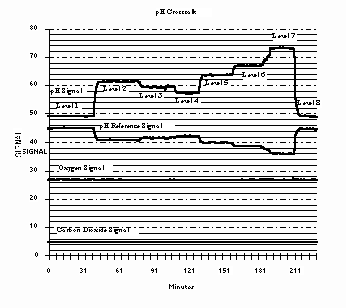
3.2 pH Crosstalk Protocol 1. The same test apparatus and solution used in the O2 crosstalk test were used for the pH crosstalk test. The initial pH was adjusted to 7.00 by the dropwise addition of 0.5 M NaH2PO4. The Carbon Dioxide and Oxygen Levels were maintained at constant levels and flow rates throughout the test. 2. The pH of the solution was shifted basic by the addition of 0.1M NaOH and allowed to equilibrate for 30 minutes. 3. Once the solution was equilibrated, a sample was tested in the Blood Gas Analyzer (BGA), and the pH verified with the pH electrode. 4. Step 2 was repeated until the pH reached 7.70. 5. 0.5 M NaH2PO4 was added until the solution pH was the same as the initial pH of 7.00. pH Carbon Dioxide(mmHg) Oxygen(mmHg) BGA Nominal BGA Nominal BGA Level 1 7.029 67.7 67.5 78.4 79.5 Level 2 7.353 67.7 65.7 78.4 79.2 Level 3* 7.289 67.7 67.2 78.4 78.4 Level 4* 7.234 67.7 67.5 78.4 79.5 Level 5 7.412 67.7 67.9 78.4 74.2 Level 6 7.517 67.7 67.6 78.4 77.8 Level 7 7.698 67.7 67.4 78.4 78.5 Level 8 7.022 67.7 67.7 78.4 78.6 Table 2: pH Levels for pH Crosstalk Study *Note: 0.5 M NaH2PO4 was used to obtain additional values in the physiological range.
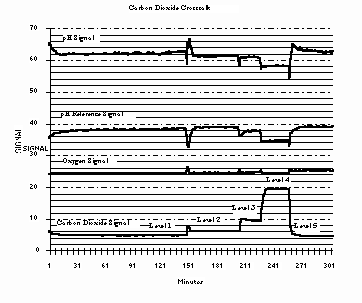
3.3 Carbon Dioxide Crosstalk Protocol 1. Four 60mL jars were filled with 50 mL of the standard test solution and equilibrated to 37�C in the water bath. Each vial was tonometered to a different CO2 level using the gas mixer. Each level is shown in Table 3. 2. The pH of each solution was then adjusted using 0.1M NaOH and 0.5 M NaH2PO4 to give a solution with pH equal to 7.42. 3. Each of the four solutions was placed in the water bath and allowed to equilibrate to 37�C. 4. The sparger from the gas mixer was inserted into Level 1 and set to the Level 1 gas mixture. This solution was equilibrated for 30 minutes. 5. A sample was withdrawn for analysis in the Blood Gas Analyzer (BGA) and the pH confirmed with the pH electrode. 6. The sparger and sensor were moved to the Level 2 vial and the gas mixture was changed to the Level 2 mix. 7. After a 30 minute equilibration time, a sample was withdrawn for analysis and the pH confirmed by electrode measurement. 8. Steps 4 and 5 were repeated for the remaining solutions and the initial solution was repeated as the last step in the sequence. pH Carbon Dioxide(mmHg) Oxygen(mmHg) BGA Nominal BGA Nominal BGA Level 1 7.422 67.7 66.5 107.7 115.5 Level 2 7.405 49.9 51.7 107.7 110.6 Level 3 7.404 32.1 32.6 107.7 106.6 Level 4 7.401 14.3 13.6 107.7 105.2 Level 5 7.414 67.7 69.2 107.7 108.4 Table 3: CO2 Levels for CO2 crosstalk Study
4.RESULTS The following charts, Figure 4 through Figure 6 depict typical crosstalk
results of wavelength multiplexed sensors. The last 8 minutes of each cycle is
used for data analysis.
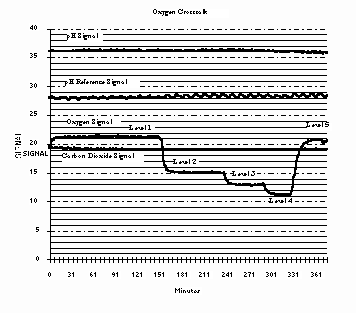
Figure 4
Figure 4 is representative of the oxygen crosstalk to the CO2 and the pH. The oxygen level was varied from 1.7 to 312.3 mmHg. The CO2 level was maintained at a constant 43.3 mmHg �0.3 mmHg throughout the duration of the test. The crosstalk to the CO2 is less than the noise of the CO2 signal, �0.05% (�0.25 mmHg). The noise on the pH reference signal is � 0.2% of its signal, which corresponds to � 0.007 pH units, the pH signal noise is � 0.1%, which corresponds to � 0.004 pH units. Therefore, any crosstalk from the Oxygen to the other parameters is less than these noise limitations. The oscillation evident in the pH reference signal was due to a synchronizing error in the timing of the filter wheel which was corrected for later tests. There was also a drift of 0.01 pH units in the solution over the duration of the test. This drift was detected by both the Blood Gas Analyzer and the pH electrode. The drift is due to buffer equilibration, not sensor drift.
Figure 5 The data in Figure 5 is indicative of the pH crosstalk over a series of pHs. The Blood Gas Analyzer results show the oxygen level was at a constant 78.2 mmHg �1.5 mmHg, and the carbon dioxide level was 67.3 mmHg � 0.6 mmHg. The pH of the solution ranged from 7.029 at Level 1 to 7.70 at Level 7. The noise level of the oxygen signal is � 0.2% of the signal. This noise corresponds to � 1 mmHg at 78.2 mmHg. The noise of the CO2 signal is � 0.05% of its signal. This level of noise is equivalent to �0.25 mmHg. These levels are the limiting factors for determination of the amount of crosstalk. The crosstalk to the oxygen and the CO2 was less than these noise levels. Despite this broad range of pH there was no detectable pH signal effect on the other constant parameters.
Figure 6 Figure 6 is indicative of the Carbon Dioxide signal crosstalk to the other parameters. The CO2 level ranged from 14.3 mmHg to 67.7 mmHg. The pH was held constant at 7.403 � 0.002 for levels 2 thru 4. The oxygen level is at a constant 107.7 mmHg � 3.0 mmHg. Since the pH signals decrease with increasing CO2 signal, the shift is caused by absorbance crosstalk and not fluorescence crosstalk. With decreasing CO2 concentration, the absorbance of the CO2 dye at the two pH wavelengths and at the Oxygen wavelengths increases and causes a downward shift in both the pH signals. The largest crosstalk effect is between 49.9 mmHg to 14.3 mmHg CO2, where the signal and, therefore, the absorbance increases dramatically. The overall effect as the CO2 varies from 49.9 mmHg to 14.3 mmHg is a 4.0% � 0.2% decrease in the pH signal and a 6.0% � 0.2% decrease in the pH reference signal. This crosstalk effect is partially compensated for in the ratio computation of these two pH signals. The crosstalk effect of this change corresponds to a change in the pH shift equal to 0.04 pH units.
The crosstalk to the Oxygen sensor is similar to CO2 signal effect on the pH. As the CO2 signal rises the Oxygen signal falls as a result of increasing absorbance by the CO2 dye. The shift in the Oxygen signal is 5.0%� 0.2% over the range of CO2, which corresponds to an 8.5 mmHg � 1 mmHg shift in Oxygen. The Level 1 Oxygen measurement indicated a 7 mmHg higher concentration of Oxygen than Level 5. The oxygen difference is caused by the gas mixers repeatability between the two levels.
5. SUMMARY The results of the crosstalk study are shown in Table 4. Crosstalk Effect Summary Table
Constant Parameters pH CO2 Oxygen pH Reference Variable CO2 - 5.0% �.2% of 4.0% �0.2% of 6.0% � 0.1% of Parameters O2 signal pH signal pH Ref. Signal Oxygen None - None None pH None None - - Table 4
6. CONCLUSION In the testing for crosstalk, it is essential that the parameters that are being held constant are stable. The accuracy of the testing is limited to the repeatability of the gas mixer, the accuracy of the Blood Gas Analyzer, and the stability of the solutions.
The data from the Oxygen dye crosstalk study indicates no detectable crosstalk to the CO2 and pH signals. The pH dye crosstalk to the Oxygen and Carbon Dioxide signals is also below the detectable limits of the sensors being studied.
The Carbon Dioxide dye shows distinctive crosstalk effects to the other parameters. Over the range of the CO2 levels studied, the pH signal showed a 6.0% �0.2% change in signal due to crosstalk, and the pH reference signal changed 4.0% �0.1% due to the same crosstalk effects. Since both pH signals shift in the same direction, the ratio of the pH signals was less affected by the crosstalk of the CO2 absorbance. The CO2 crosstalk affects the ratio by 5.4% �0.2% over the range of the CO2 dye. The CO2 sensor affects both the pH and Oxygen signals through absorbance of their respective wavelengths.
Through careful measurement and analysis of these effects, this crosstalk can be compensated for by the instrument software. Minimal crosstalk was found in measurements of this system. A protocol suitable for testing of wavelength multiplexed system crosstalk measurement has been demonstrated. Future test protocols will incorporate testing at the extremes of each of the constant parameters. Some dependency of the crosstalk on the signal intensities has been shown. Additional information will be obtained by expanding testing to high and low physiological limits for the constant parameters, rather than using only physiological normal. |
Send mail to LarryRing@lightsensecorp.com with questions or comments. |